
Excerpt:
The best pet door for a sliding glass door depends on your long-term plans, property and budget. Inserts offer easy, damage-free installation, perfect for rental homes, while permanent In-Glass installations provide long-term, durable performance for homeowners.
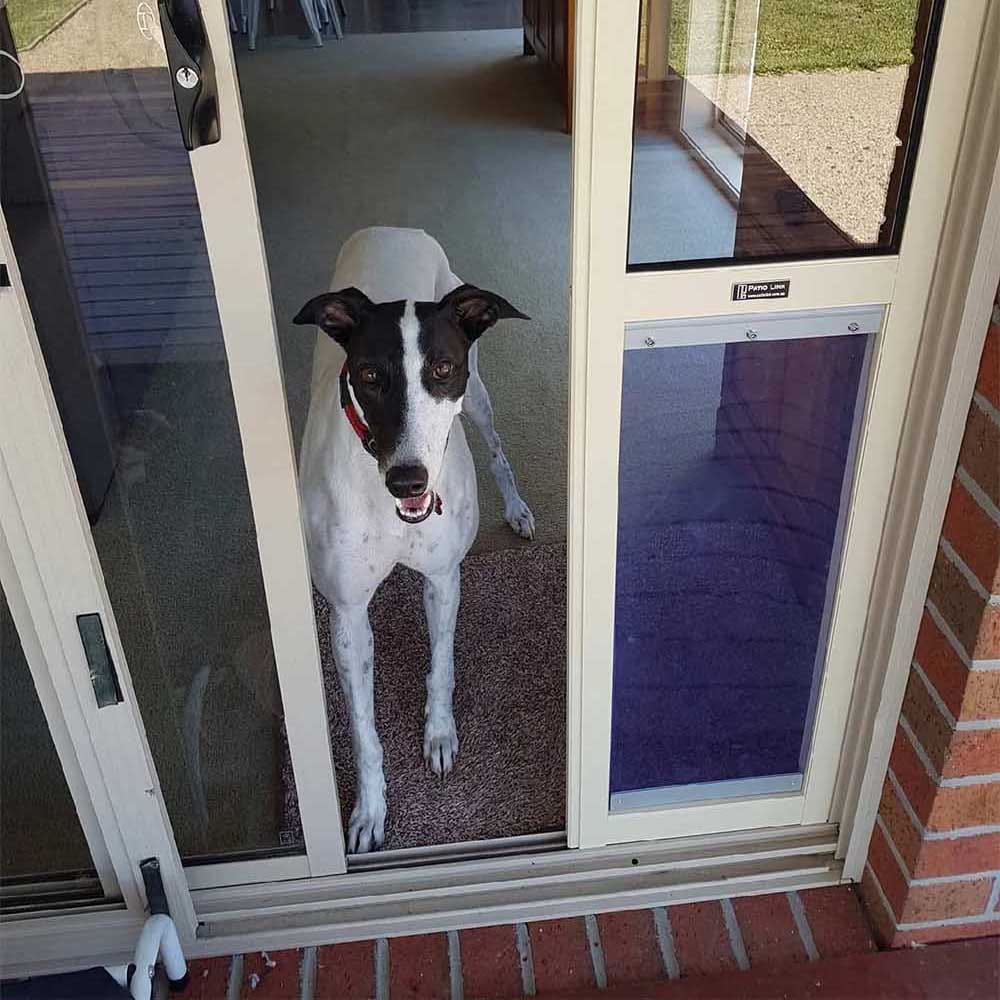
If you have a sliding glass door and a pet who wants in-and-out privileges on demand, you might have come across two options: a removable insert that slots into the existing track, or an in-glass pet door installed directly into a glass pane. Both get the job done, but they suit very different homes, budgets, and long-term plans.
At Aussie Pet Doors, we’re often asked which option is better. Honestly, it depends on your home — whether you’re renting, how long you plan to stay, and how much you care about your home’s security and insulation. Once you understand these alternatives, you can choose the right pet door.
In this guide, we’ll help you choose the right pet door for a sliding glass door setup.
Insert vs In-Glass: The Core Difference
Both pet door sliding-door solutions have distinct fundamental features.
| Insert Pet Door | In-Glass Pet Door | |
|---|---|---|
| What it is | A separate framed panel with a built-in flap | A flap built or notched into a glass pane |
| How it fits | Slots into the existing track alongside the original glass | Replaces the existing glass pane |
| Modification | Nothing is cut or permanently altered | Glass is replaced |
| Becomes part of the door? | No — sits alongside it, fully removable | Yes — becomes a permanent part of the door |
Insert Installation Requirements
Inserts are easier to install, but there are a few requirements that need to be taken care of:
- Compatibility: Accurate width and height measurements ensure a perfect fit for aluminium and uPVC track.
- Adequate track depth: Some older, narrower track depths don’t hold an insert securely, affecting the seal.
- Height range: Most inserts are adjustable to fit openings around 1.8m–2.4m tall; unusual sizes may require a custom panel.
- A level sill: The sill insert relies on compression rather than fixing, so an uneven sill can affect the fit.
- No structural work: No cutting, drilling, or glass replacement is required — making inserts a perfect choice for renters looking for an easy pet door sliding-door installation.
In-Glass Installation Process
In-glass installation is not a DIY project. It includes:
- Assessment: The installer measures the panel and inspects the frames and rollers.
- Glass removal: The old glass panel is replaced with a new pane featuring a built-in flap.
- Reinstallation: The finished panel is reinstalled in the original frame and tested for smoother glide and proper sealing.
- Final checks: Rollers, seals, and the flap mechanism are confirmed to be working properly.
Cost Comparison
| Insert Pet Door | In-Glass Pet Door | |
|---|---|---|
| Upfront cost | Generally lower | Generally higher |
| What you’re paying for | A manufactured panel and quick fit, no glazing labour | Glass framing and specialist glazing labour |
| Added cost factors | Custom sizing for unusual door openings | Double-glazed panels, larger flap cut-outs |
| You get | A removable accessory | A permanent upgrade built into the door |
Panel size, glass type, pet size, and frame condition all affect the final quotation, so an on-site quote is the best way to get an accurate figure. Aussie Pet Doors offers no-obligation quotes across Melbourne and Sydney, with no hidden charges.
Energy Efficiency & Weatherproofing
| Performance Matrix | Insert Pet Door | In-Glass Pet Door |
|---|---|---|
| Seal integrity | Uses interlocking compression seals against the frame | Integrated seamlessly within a single, solid pane of glass |
| Draft resistance | Rubber or brush seals can degrade over time | Fewer exposed fittings; eliminates secondary frame joints |
| Insulation options | Generally limited to single-pane variations | Fully compatible with advanced double-glazed units |
| Best suited for | Moderate climates and flexible living setups | Extreme weather regions and long-term thermal efficiency |
Well-made inserts with quality seals can withstand even high-wind conditions. In contrast, in-glass pet doors have a structural advantage — with fewer fittings exposed, making them a reliable long-term solution.
Security Features
| Insert Pet Door | In-Glass Pet Door | |
|---|---|---|
| Frame | Reinforced aluminium frame | Toughened safety glass |
| Locking options | Lockable flap panels; microchip-activated flaps secure locking pins in the track | Microchip-activated flaps (chip-only entry); heavy-duty locking security panels for big dogs |
| Flap sizing | Sized to your pet, minimal extra clearance | Sized to your pet, minimal extra clearance |
| Forced-entry resistance | Good, with a reinforced frame | Very high, due to toughened glass |
When choosing a pet door for a sliding door, always check for locking systems (microchip locks or lockable inserts) if security is your top priority.
Solution for Large Dogs
Large dog doors add an extra layer of consideration. XL inserts are available, but the panel width can only stretch so far before it starts to eat into your door opening. With in-glass doors, you need a sturdier frame and a larger notch to maintain the door’s structural integrity — this is where a custom-made panel plays an important role.
Aussie Pet Doors offers a wide range of options, whether it’s a cat flap or an XL dog door for breeds over 60kg, and we always check the flap size against your dog’s measurements before any fitting.
Which One Is Right for You?
If you’re renting and just want pet access without a permanent change, inserts are the practical choice. But if you own your home and want maximum security, insulation, and a long-term pet door sliding-door solution, in-glass pet doors are the better fit.
Ready to give your pet the freedom they deserve? Contact the team at Aussie Pet Doors today to book your comprehensive layout assessment and claim your hassle-free installation quote across Sydney and Melbourne.
FAQs
Which type of pet door is best for a sliding glass door?If you’re living in a rental property, inserts are the best option, as you can easily install and remove them as needed. In-glass doors suit homeowners who want long-term efficiency, security, and durability. Both are well-suited to fit a pet door for a sliding glass door opening.
Are insert pet doors suitable for rental properties?Yes, insert pet doors are suitable for rental properties, as they don’t require drilling or cutting glass for installation and can be removed and relocated without making any permanent changes to the sliding door.
Does an in-glass pet door require cutting the glass?The existing pane is replaced with a manufactured one that has a built-in flap. This process must be carried out by a qualified glazier.
Which pet door offers better energy efficiency and insulation?In-glass doors generally insulate better, particularly with a double-glazed panel, because there’s no separate frame joint for drafts to develop. Inserts still perform well with quality compression seals.
How much does it cost to install a pet door in a sliding glass door?The cost of installation varies depending on pet size, panel dimensions, glass type, and whether you choose an insert or in-glass door. Inserts are generally cheaper upfront; in-glass costs more due to glass fabrication and specialist labour. A free, on-site quote gives the most accurate figure.
Are sliding-glass-door pet doors secure against intruders?Yes, they can be secured with features such as lockable panels and microchip-activated flaps. A flap sized accurately for your pet minimises the risk of intruders getting in.
Can a pet door be installed in any sliding glass door?Most doors can accommodate either option, but track depth, frame condition, glass type, and door age can affect feasibility. A site assessment confirms what’s possible for your particular pet door sliding door setup.
What size pet door do I need for my dog or cat?It depends on your pet’s height and width. A cat and small dog flap suits pets under 9kg; medium suits up to 20kg; large suits up to 40kg; and XL suits giant breeds over 40kg. Aussie Pet Doors can confirm the right size during a free measurement and provide an accurate quotation.