
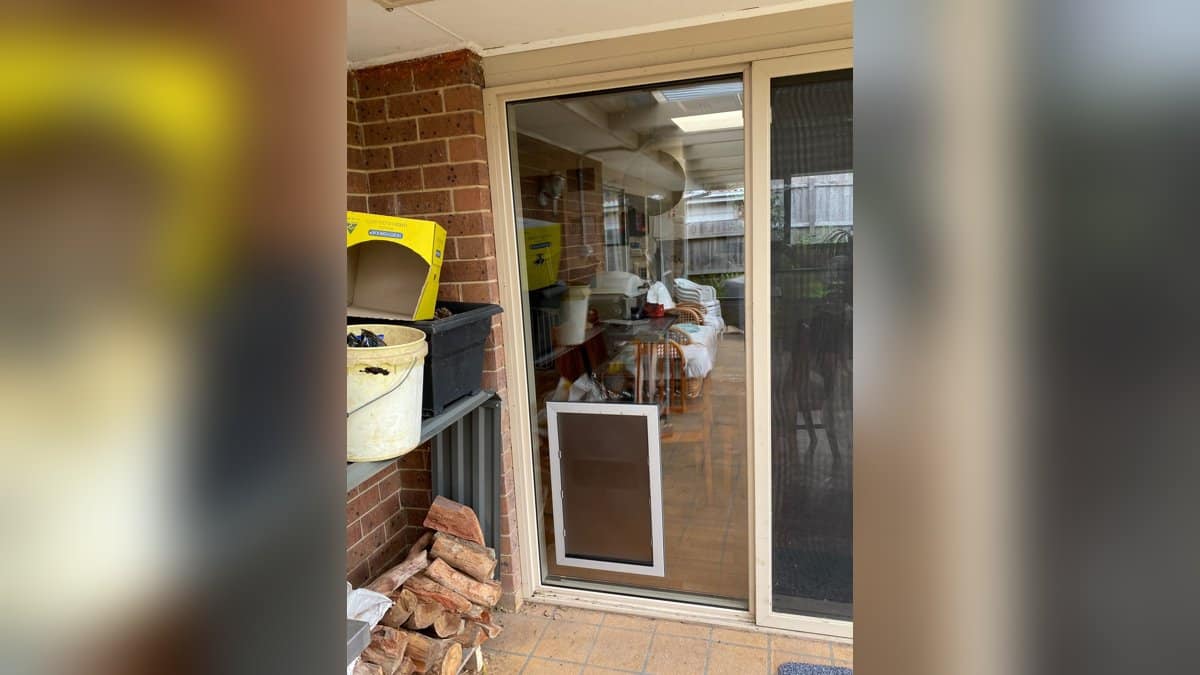
Key Takeaways
- Glass can’t be drilled or sawn like timber, so a glazier has to remove the panel, have a replacement panel made with the opening prepared before the glass is toughened, fit the glass pet door into that opening, and reinstall it.
- Different pet door types such as manual flaps, microchip-activated electronic doors, sliding door inserts, double-glazed panels, and lockable panels cater to different needs, depending on your pet, home, and budget.
- You should choose the pet door by considering your pet’s size, glass type, door’s security features, and weather sealing.
- Measure your pet accurately: shoulder height (floor to the top of the shoulders) and the widest point of the chest. As a general guide, the flap height should be roughly 5 to 10 cm above shoulder height, assessed case by case; the same allowance isn’t automatically added to width.
- Cost: Installation labour starts from $250 including GST. Pet doors and other materials are charged separately. This is not a complete supply-and-install price. Professional installation helps the door perform as intended, but results depend on the product, fitting and existing door.
Fitting a pet door into glass is a job for a glazier or specialist installer, because the glass can’t simply be cut on site. This guide walks you through how it works, what it costs, and what to look for before you book a tradie to fit one.
What Is Dog Door Glass Installation and How Does It Work?
Generally, fitting a dog door in a timber door means cutting or inserting a pet flap so your dog can move between indoors and outdoors without you having to play doorman. However, glass doors require a different approach. Because glass cannot simply be drilled or sawn like timber, the job is handled a little differently from a standard pet door fit-out.
Here is the process:
- A glazier measures the door panel
- The existing glass panel is removed
- A replacement panel is manufactured with the required opening prepared before the glass is toughened
- The pet door unit is fitted into the opening and sealed
- The panel is reinstalled into the door frame
Timing of pet door installation depends on the job, glass manufacture and scheduling, as replacement toughened panels are custom-made.
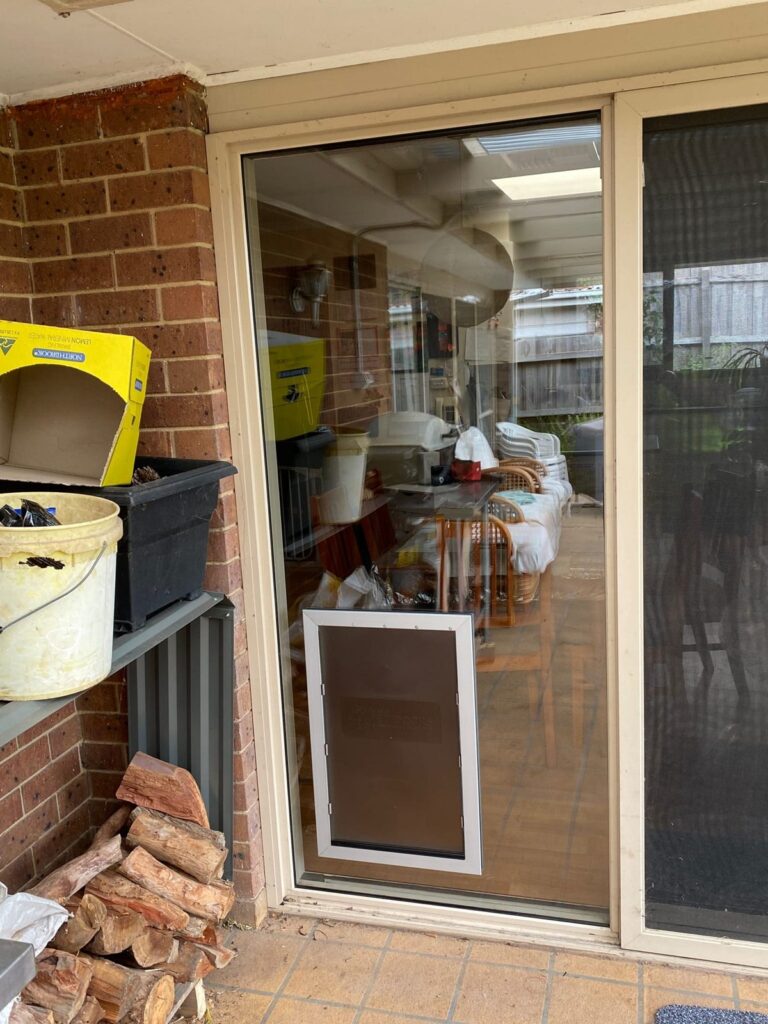
Why Choose a Glass Pet Door for Your Home?
A glass-fitted pet door keeps your home’s look intact while giving your furry mate proper independence. Rather than leaving the pet door ajar and letting heat or cold in, a well-chosen and correctly fitted glass insert can help keep your home secure and energy-efficient, though its performance will depend on the selected product, correct fitting and the existing door configuration. Benefits include:
- No more getting up to let the dog in and out
- Helping to keep flies, draughts and rain out when the flap is closed
- Matches your existing glass door rather than requiring a separate flap in the wall
Types of Doggy Doors in Glass
There are a few different styles of glass pet doors to choose from, depending on your pet, your home and your budget. They are:
- Manual flap doors, a simple hinged or brush-seal flap your pet pushes through
- Electronic or microchip-activated doors, which are designed to unlock only for your registered pet’s microchip or tag. Depending on the model, the pet then pushes the flap open, or the flap opens automatically
- Glass panel pet doors for sliding or stacker doors, permanently fitted into a replacement glass panel
- Track-mounted sliding door inserts, which sit in the door track rather than being installed permanently into the glass
- Double-glazed panels with a built-in pet door opening, designed specifically for insulated glass units
- Lockable panels with flaps that can be manually locked at night or when you are away
You can find a range of electronic and automated smart pet doors at Aussie Pet Doors.
How to Choose the Right Dog Door for a Glass Door?
Picking the right dog door for glass door installation comes down to a handful of practical factors. They are given below:
- Your pet’s size – The opening needs to comfortably fit their shoulders and head
- The type of glass in your door – Single-glazed, toughened or double-glazed all influence the fit
- Door type – Hinged, sliding, and stacker doors each need a slightly different approach
- Security features – Look for lockable flaps if you are worried about unwanted entry
- Weather sealing – A good brush or magnetic seal helps keep draughts and rain out. Also consider the material’s ease of cleaning and long-term durability before selecting a dog door.
Dog Door Glass Installation
Fitting a pet flap into sliding and double-glazed doors takes a bit more planning than a standard hinged door.
Double-Glazed Doors
Double-glazed units require a replacement sealed unit made with the pet door opening built in, which is designed to maintain the seal between the two panes and helps reduce loss of insulation.
Installing a pet door into a double-glazed door or window requires replacing the existing sealed glass unit with a new custom-manufactured panel made of toughened (tempered) safety glass with the opening prepared before the glass is toughened, as double-glazed units cannot be cut on-site.
Replacing the glass panel is different from replacing the entire door: the panel option keeps your existing door and frame, while a full door replacement means supplying a new door.
Sliding Doors
A pet door can be permanently installed into a sliding door by replacing the glass panel with a new one manufactured with the opening, as described above.
As far as sliding doors are concerned, track-mounted patio pet doors typically use a vertical insert panel. The process of installing a track-mounted insert in sliding doors involves the following steps. The insert sits in the door tracks and must be secured as described below.
- Open your existing sliding door
- Insert the pet panel directly into the exposed upper and lower tracks, and position it against the tracks.
- Your original sliding door panel then closes against this new insert. The insert is secured to the original frame and door using the brackets supplied and slight modifications.
Replacement glass panels, especially double-glazed units, are heavy, so these jobs are best left to a glazier who works with sliding and double-glazed systems, rather than a general handyman.
Aussie Pet Doors sells track-mounted sliding door inserts. These inserts can be secured to the original frame and door using the brackets supplied with the insert and slight modifications.
How to Measure Your Pet for a Glass Door
Take these measurements:
- Height, measured from the ground to the top of your dog’s shoulders
- Width, measured across the widest part of your dog’s chest
As a general guide, Aussie Pet Doors recommends a flap height roughly 5 to 10 cm above your pet’s shoulder height, assessed case by case. This is general guidance rather than a universal requirement. The same allowance isn’t automatically added to width: the flap should be wider than the widest point of your pet’s chest. Also check that the step-over height (the gap from the floor to the bottom of the flap) is no higher than your pet’s belly.
Flap opening sizes and glass cut-out sizes vary from model to model, so we don’t list generic sizes here. Each product page shows that model’s specifications, and your installer confirms the exact flap opening and cut-out size for the model you choose before the replacement glass panel is ordered. Your pet’s weight alone shouldn’t determine the size; use the measurements above.
How Much Does Dog Door Glass Installation Cost in Australia?
Take the following factors into account to estimate the cost of dog door installation.
- Pet size and opening dimensions
- Whether single-glazed, toughened, or double-glazed glass is used
- Whether you use a manual flap or electronic, microchip-activated doors.
Fitting a pet door into glass involves more than fitting a flap into timber or a wall, because a replacement glass panel is made for the job. Installation labour starts from $250 including GST. Pet doors and other materials are charged separately. This is not a complete supply-and-install price.
Your final quote depends on your pet’s size, the door type, and whether the pet door goes into timber, a wall or glass.
Are Doggy Doors in Glass Safe, Secure and Weather-Resistant?
Suitability and performance depend on the selected product, fitting and the existing door configuration. Weather resistance varies by product, so check each model’s specifications. Features to look for include:
- Brush or magnetic seals to block draughts and rain
- Lockable panels for extra security
- UV-stable frames designed to resist warping and fading in the sun
- Toughened glass surrounds that meet the same safety standards as the rest of your door (confirm with your glazier that they meet the relevant safety standards)
- Reinforced flap options for larger or more determined dogs
Correct installation matters just as much as the product.
Advantage of Aussie Pet Doors
Aussie Pet Doors installs pet doors in glass doors across Melbourne and Sydney. We also supply pet doors and accessories for households across Australia.
We supply and install a range of pet doors and flaps. Get in touch with our team to discuss the right pet door option for your home and your pet. Our team can guide you through the installation process.
FAQs
How much does dog door glass installation cost in Australia?
Installation labour starts from $250 including GST. Pet doors and other materials are charged separately. This is not a complete supply-and-install price. Your final quote depends on the door size, the glass type and the pet door you choose.
Can a pet door be installed in an existing glass door?
Yes, but existing toughened glass cannot be cut. A replacement panel is manufactured with the required opening prepared before the glass is toughened.
Can you install doggy doors in glass double-glazed doors?
Yes, you can install a doggy door in a double-glazed glass door. But it will require a specialist. You cannot cut a hole into the door’s existing glass. A professional glazier must replace the entire glass panel with a new, custom-made double-glazed unit that has a specialist insert built specifically for the pet door. Note that replacing the glass panel is different from replacing the entire door.
What is the best dog door for glass door installation?
The best choice depends on your dog’s size and your local climate. It’s a smart choice to go with a strong flap or panel that seals well and has a lock.
Can a dog door be installed in a sliding glass door?
Yes, you can install dog doors in a sliding glass door. Options include a glass panel pet door that replaces one pane or a track-mounted panel insert that fits into the sliding door’s opening without cutting the glass, and is secured using the supplied brackets and slight modifications.
Are doggy doors in glass safe for Australian homes?
It depends on the selected product, correct fitting and the existing door configuration. Toughened glass and a qualified installer are recommended.
How do I measure my dog for a pet door in a glass door?
Measure your pet’s shoulder height (floor to the top of the shoulders) and the widest point of its chest. As a general guide, choose a flap height roughly 5 to 10 cm above shoulder height, assessed case by case; the same allowance isn’t automatically added to width. Check that the step-over height is no higher than your pet’s belly.
Does dog door glass installation affect home security?
It depends on the selected product, correct fitting and the existing door configuration. Pick a pet door with a sturdy frame and a lockable panel, and have it professionally fitted. Lock it when you are away or overnight.
Can a professional install a dog door for a glass door without replacing the entire door?
Yes. In most cases, only the glass panel needs to be replaced with one that has the pet door built in, so the entire door does not need replacing.
What type of glass is best for dog door glass installation?
Toughened safety glass. Existing toughened glass can’t be cut, so the replacement panel is made with the pet door opening before it is toughened.



