
Excerpt:
A dog crate is safest when it suits your dog’s size, is checked before every use and is introduced without pressure. This practical guide covers seven essential rules, including ventilation, secure doors, interior inspections, positive crate training, travel preparation and choosing a durable collapsible dog crate for home, camping or vehicle journeys.
A crate should be a safe, comfortable space for your dog to rest; it is not a place to be forced. Introduce it slowly and use it when travelling or training at home.
The Seven-Rule Safety Checklist
- Choose the correct size — Your dog should be able to stand, turn around, lie down, stretch and change position without touching the walls.
- Check ventilation — The crate should have good airflow and never be covered in a way that blocks air.
- Check the locks — Before settling your dog, check the door lock by giving it a gentle push. If it feels loose, repair or replace it.
- Check inside the crate — Check for any loose wires, broken clips, or sharp or damaged parts that could harm your dog.
- Introduce it gradually — Leave the door open, add familiar bedding and let them explore voluntarily. Reward their calm behaviour.
- Respect your dog’s limits — Provide toilet breaks, water, exercise and interaction. A crate is not intended to be used as punishment or a substitute for daily care.
- Secure it during travel — Prevent the crate from sliding, rolling or shifting inside the vehicle. Never leave your dog unattended in a parked vehicle.
Dogs don’t automatically get comfortable. Keep the crate clean and provide comfortable bedding. You need to build a positive environment to help them adapt. Some dogs may do better with a gated room or playpen instead.
Where Can I Buy Durable Metal Dog Crates?
You can buy durable metal dog crates from specialist pet retailers, pet-supply stores and Australian online suppliers. Check dimensions, materials, lock design, replacement parts, and delivery options before ordering.
What To Check Before Buying?
- Inspect the crate’s frame, doors, locks, and base before buying.
- Check both inside and outside dimensions.
- Ask whether replacement trays, dividers or hardware are available.
- Check whether the crate is suitable for home use, vehicle travel or both.
- Avoid choosing a model based on appearance alone; your dog’s size, strength and behaviour matter more.
When assembled, the crate should feel stable and secure; the doors should close properly, and it should have no sharp or loose parts that could harm your dog.
What Makes A Collapsible Dog Crate Safe For Travel?
A collapsible crate is useful for everyday travel, camping, and vehicle transport. Choose a crate suited to your journey.
This design is convenient, but you still need to assemble it before your dog enters. Always test stability before every journey.
For crash protection, look specifically for independently tested vehicle restraints or crates.
Don’t assume a crate that hasn’t been independently crash-tested provides crash protection.
The US-based Centre for Pet Safety conducts independent testing and operates a certification program for products that meet its testing requirements.
Check the current rules in your state or territory to ensure they cover safety requirements.
Crate Selection Checklist
| Crate Type | Best For | Compare Before Buying |
|---|---|---|
| Plastic carrier | Small dogs, vet visits and basic transport | Ventilation, handle strength and door security |
| Standard wire crate | Home training and indoor use | Welds, latch quality, tray and divider |
| Premium aluminium crate | Regular travel and vehicle transport | Design, ventilation, handles and shipping |
How Can I Crate Train My Dog?
A crate can help prevent a puppy from wandering unsupervised while learning household routines. It should support active training, not replace it.
- Feed your dog meals inside the crate.
- Put safe toys in the crate for playing.
- Do not make your departure emotional. Give your dog a treat for going inside the crate.
- Take the dog outside regularly and reward toileting in the appropriate outdoor area.
- Keep the crate comfortable, and provide warm bedding.
Never use a dog crate as punishment. If your dog drools excessively or tries to escape, pause training and seek help from a qualified behaviour professional.
What Are The Most Durable Collapsible Dog Crates?
Durability comes from the whole design, not just the label. Choose reinforced aluminium or metal construction, secure doors, corrosion-resistant surfaces, stable feet and hardware that stays locked during movement.
A Durable Crate Built For Travel
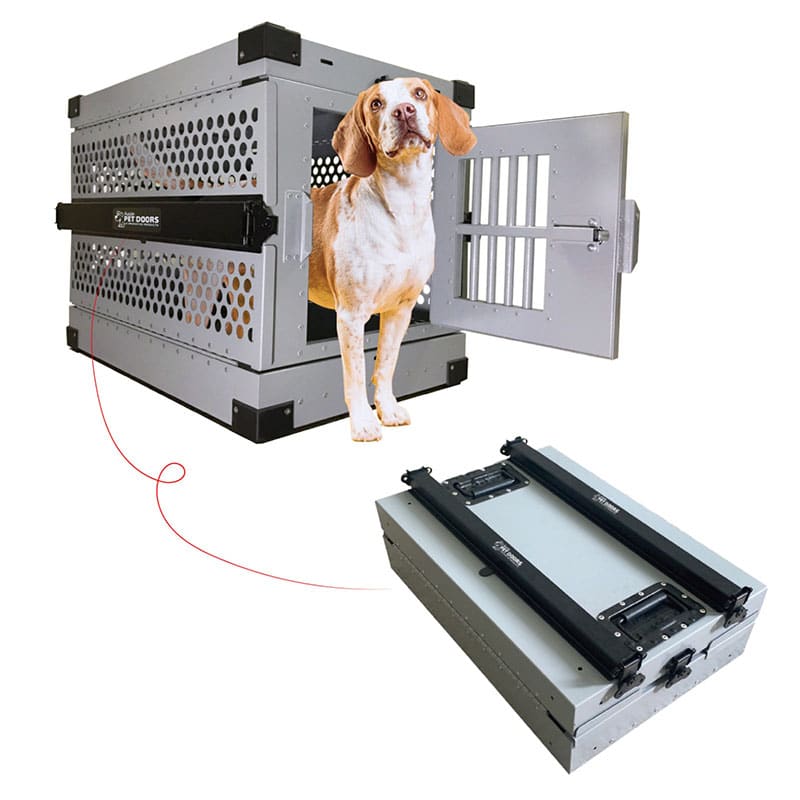
The APD Collapsible Dog Crate combines a lightweight aluminium build with a folding design for easier storage between trips. It also includes ventilation, durable handles and heavy-duty hardware, with four sizes available for different dogs.
Our collapsible crates are designed for everyday use and travel. When using a crate in a vehicle, secure it firmly and use proper restraints so it cannot move during normal driving.
How To Choose The Right Size Collapsible Dog Crate For My Dog?
For house training, an excessively large crate may allow a puppy to sleep at one end and toilet at the other. A divider can make the space more suitable without requiring you to replace the entire crate as your dog grows.
Key Measurements And Fit
- Measure from nose to base of tail for length.
- Measure from the floor to the top of the head or ears for height.
- Add approximately 8–10 cm so your dog can move without being cramped.
Travel Safety Essentials
If you want to take your dog on a road trip, check current road rules and animal welfare requirements, which vary by Australian state and territory. Follow some tips to keep your dog safe and comfortable during the trip.
- Secure the crate so it cannot slide or roll when the vehicle moves.
- Keep the crate out of direct sun and away from hot surfaces.
- Take breaks for water, toileting and movement on longer journeys.
- Use a lead before opening the crate in an unfamiliar place.
- Check the crate after setting up at a campsite.
- Do not rely on an open vehicle tray without appropriate protection, secure positioning and weather cover.
Dogs Victoria advises that transport cages should allow a dog to stand, turn around, lie down and behave normally, with ventilation on at least three sides.
FAQs
Is it safe to put bedding or a blanket inside a dog crate?
Yes, as long as it’s flat and can’t bunch up. Avoid loose blankets in a moving car, since they can shift and block ventilation.
Can two dogs share one crate safely?
Generally no, even for small or bonded dogs. A shared crate limits how each dog can stand, turn or lie down, and increases the risk of injury if one dog moves suddenly during travel.
Is it safe to leave water or food in a crate during a car trip?
Skip loose food and water bowls while driving, since loose bowls can tip or spill while the vehicle is moving. Use a clip-on travel bowl and offer water at rest breaks instead.
What temperature range is safe for a dog in a crate?
Keep the dog in a well-ventilated crate. Never leave a crate in direct sun or a parked car, where temperatures can climb dangerously within minutes, even with cracked windows.
Is it safe to crate a dog overnight?
Yes, it is safe for most healthy adult dogs, as long as they’ve had a toilet break beforehand and the crate is well-ventilated. Puppies and senior dogs may need a nighttime break, just as they would need during the day.