
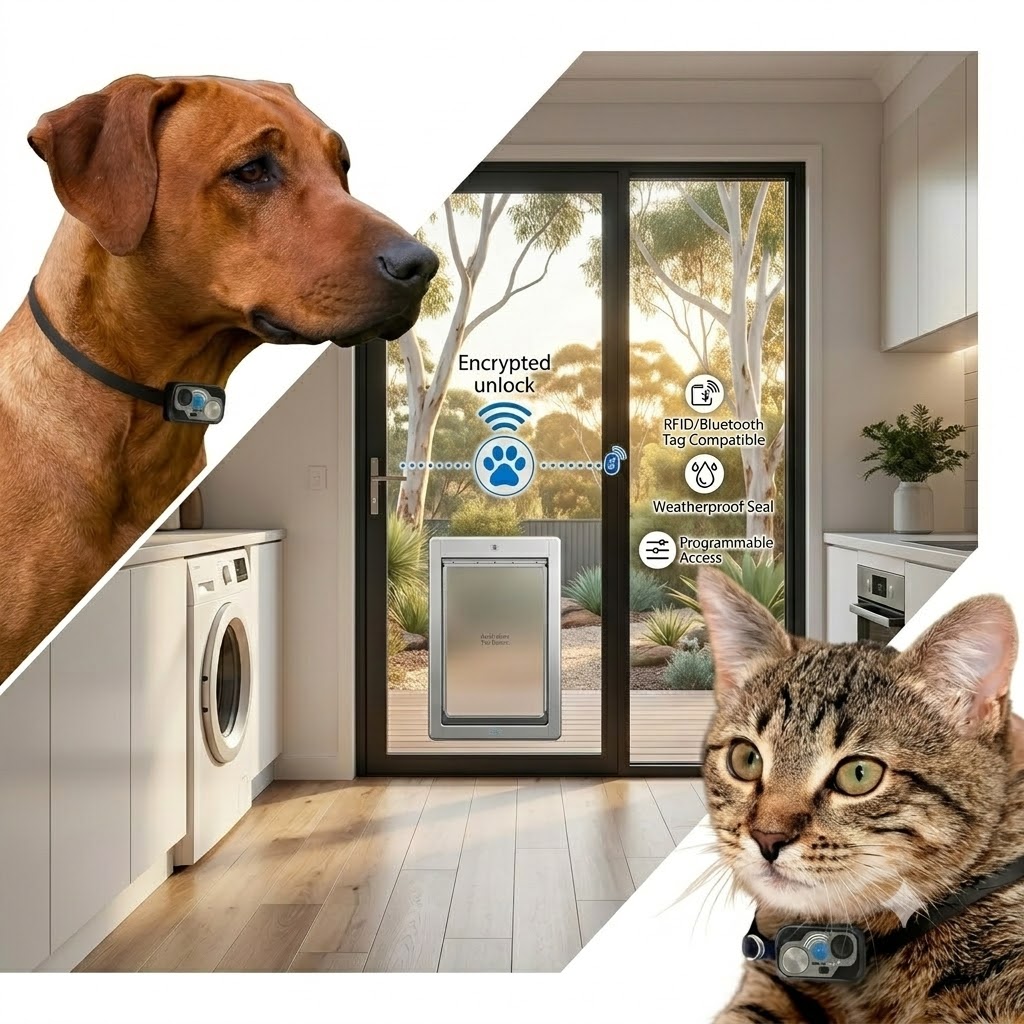
Planning a DIY pet door installation? Cutting into glass, security screens, and walls carries severe risks – from shattered panels to security vulnerabilities. In this guide, we break down the five hidden dangers of DIY pet door projects and explain exactly when it’s time to call in professional pet door installers
Installing a pet door gives your pet the freedom to move around as they want, saves you time from doorman duty, and helps reduce accidents on rugs – keeping your furry family member active. This is why many Australian pet owners decide to install pet doors.
And browsing through the options, a common question pops up: “How tough is it to do it by myself?”
Some installations, such as a basic flap on a hollow-core timber door, can be done by a DIYer without risk. But in cases like installing a pet door for sliding glass doors, security screens, or brick walls, DIY can carry many hidden risks that can cost you more than a professional job ever would.
Here are the five risks that can rarely make it in the instruction manual:
Risk 1: Structural Damage to Your Door, Glass, or Wall
One of the most common mistakes homeowners make is underestimating the installation project and forgetting how unforgiving building materials can be.
- Timber Door Installation
Cutting in timber sounds pretty easy, until you nick a structural edge, split the veneer, or create a hole that’s slightly too large or misaligned – then you are not just buying a flap, but rather a new house door.
- Glass Door Installation
Glass doors are far more dangerous than timber door installations – they should be handled strictly by professionals. The standard Australian glass doors and windows are made from toughened glass that complies with the Australian standards AS1288. You cannot drill or score this glass; it will shatter. Safely integrating a pet door for sliding glass door setups requires either a full glass replacement with a pre-cut glass panel or a trained glazier with the right tools.
- Wall Installations
Wall installations are more like a minefield. The pet door installation must be done without damaging electrical wires, pipelines, or wall studs – or a simple installation might cause severe damage costing thousands of dollars. Certified pet door installers understand the specifications and carry the required equipment to identify these hazards before starting installation.
Hiring a professional is not only about installation; they protect your doors and walls from damage, saving you time and money.
Risk 2: Security Vulnerabilities You Didn’t Plan For
A poorly placed pet door can compromise the security and safety of your property. For example, the most common mistake is placing the pet door too close to the door handle or deadbolt, which can allow someone to reach through and unlock the door from inside.
This problem is considered one of the most common pet door myths, but it is actually a valid concern for homeowners – and it is entirely preventable if installed properly. The professional pet door installers will correctly position the pet door, making sure no one can reach the door lock.
DIY installers often leave gaps around the frame. Even a small gap can be enough to compromise a security screen’s AS5039 rating, turning it into a standard barrier door without you even realising it.
If you’re fitting a pet door sliding door, you should know that poorly fitted inserts can be lifted easily out of track – making it an easy target for intruders. Professionally installed sliding door inserts sit flush and secure, often with additional locking pins or bars to prevent any security vulnerabilities.
Risk 3: Energy Loss and Poor Weatherproofing
The Australian weather is highly unpredictable and demanding – there are scorching summers to freezing winters in Melbourne and Sydney. And a pet door, if not properly sealed, is an open window that lets the conditioned air escape year-round.
Common weatherproofing failures in DIY projects include:
- Gaps between the frame and the cut edge of the door or the wall.
- Flaps that sit slightly off-level, preventing the magnetic bottom strips from closing completely.
- Incorrect sizing, where the pet door is slightly too small for the frame recess, creating gaps around the perimeter.
- Missing or incorrectly applied sealing strips.
The gaps can increase your electricity bill, and in some cases, an air leak caused by a misaligned pet door can introduce moisture, leading to swelling in timber doors, mould around wall installations, or condensation issues in double-glazed panels.
Professional pet door installers seal every edge properly as part of the job, ensuring the installation performs well thermally and functionally.
Risk 4: Voiding Your Product or Door Warranty
This is a hidden trap that catches many property owners completely off guard. The vast majority of modern door and window manufacturers include strict clauses in their warranties that void the warranty the moment anyone other than a certified professional makes modifications. And if you cut a hole in the wrong place on a relatively new door, you may be unable to claim a warranty – for warping, hinge issues, or seal failure – because of the DIY modification.
Similarly, some pet door product warranties include conditions around installation. If the product is installed incorrectly and the flap mechanism fails within the warranty period, the manufacturer may decline the claim on the basis that improper installation caused the damage.
Always read the warranty documentation for both your door and your chosen pet door product before picking up a jigsaw. When in doubt, a professional installation preserves all your warranty protections and gives you peace of mind.
Risk 5: Safety Risks to You and Your Pet
DIY projects can pose safety hazards, often creating a risk to pets and homeowners. For instance, installing a heavy pet door sliding door insert or fitting a unit into existing glass panels without the right tools and training can cause serious injuries.
- Human risks:
- Cutting through walls without knowing what’s behind them risks contact with live electrical cables.
- Using the wrong blade on a jigsaw or circular saw in a confined space creates its own hazards.
- Pet Risks:
A poorly fitted flap can create physical risks such as:
- A frame that’s too tight, or a flap with a sharp edge from an imprecise cut, can scratch or injure your pet as they pass through.
- A flap that doesn’t hang correctly may fall back unexpectedly and startle or trap a smaller animal.
When you hire a professional pet door installer, you get an efficient installation that keeps you and your pet safe.
When Should You Call the Pros?
For basic installations, like a standard cat flap on a hollow-core interior door, DIY projects are fine – but for many situations, hiring a professional pet door installer is the smarter choice:
- Glass Installations: Any pet doors installed in glass doors or a pet door for a sliding door requires a licensed glazier.
- Security screens: Cutting into a security mesh or screen door without specialist frames can void the door’s security rating.
- Brick or double-brick wall installations: Wall cuts require the right tools, knowledge of what’s inside the wall, and proper finishing.
- Double-glazed panels: These have sealed gas chambers that can be permanently damaged by incorrect drilling or cutting.
- Any time you’re unsure of sizing or placement: Getting the size wrong means starting over – professionally done means it’s right the first time.
At Aussie Pet Doors, our team of experienced installers works across Melbourne and Sydney to fit pet doors in glass, timber, screens, and walls – safely, cleanly, and with minimal disruption to your home.
Ready to give your pet the freedom they deserve without risking your home’s structural integrity? Get your free professional installation quote from Australian Pet Doors today!
FAQs
Can DIY pet door installation damage my door or wall?
Yes, it can. Cutting into doors and walls without the right equipment can cause severe damage. This can cause splitting in the timber door, and lead to accidental damage to the electrical wiring and plumbing inside the walls, and compromise the structural integrity.
How can a poorly installed pet door affect home security?
A pet door placed too close to a door handle or deadbolt creates a risk where an intruder could unlock the door from outside. Or, if gaps remain around a poorly fitted frame, it can also compromise security screen ratings. Professional installers overcome these weaknesses by setting the flap at the right height and distance, and using secure, flush-fitting frames.
Does DIY installation impact energy efficiency?
Yes. If you have a pet door with a loose frame, an uneven flap or a misaligned seal, you’ll be losing conditioned air all the time. This raises your heating and cooling bills and can create moisture that can damage nearby materials. Professionally installed pet doors are sealed properly from the start, helping to keep your home comfortable and energy efficient.
When should I hire a professional pet door installer?
Hire a professional if you are installing a pet door sliding door system, security screen, brick or cavity wall or double-glazed panel. These materials require specialist knowledge and tools, and in the case of glass, they must comply with Australian Standards. If you’re unsure about sizing or placement, professional advice will save you from costly mistakes.
Are pet doors in glass doors safe to install yourself?
No, standard Australian glass doors and windows are made from toughened glass that complies with the Australian standards AS1288. You cannot drill or score this glass; it will shatter. Safely integrating a pet door for sliding glass door setups requires either a full glass replacement with a pre-cut glass panel or a trained glazier with the right tools.
What tools are required for DIY pet door installation?
Typically installing a timber door is a simple task requiring a jigsaw, drill, measuring tape, pencil, screwdriver and sealing compound. But glass installations require specialist cutting equipment and glazing tools that most homeowners don’t have. Wall installations may also require a stud finder, angle grinder, and professional finishing materials. Lacking the right tools is one of the primary reasons DIY installations go wrong.
Can DIY installation void product or door warranties?
Yes, many manufacturers will void the door warranty if an unlicensed person modifies it. Some pet door product warranties depend on proper installation. If your door is still under warranty, check the terms carefully before attempting a DIY modification – a professional installation keeps your protections in place.
How much does professional pet door installation cost?
The cost of installing a door in Australia will depend on the type of door, the material and its location. A simple timber door installation is typically the cheapest. Glass installations are pricier because they must be replaced, whereas wall installations require more labour and materials. Contact Aussie Pet Doors today and get an accurate, no-obligation quote for your Melbourne or Sydney home.