
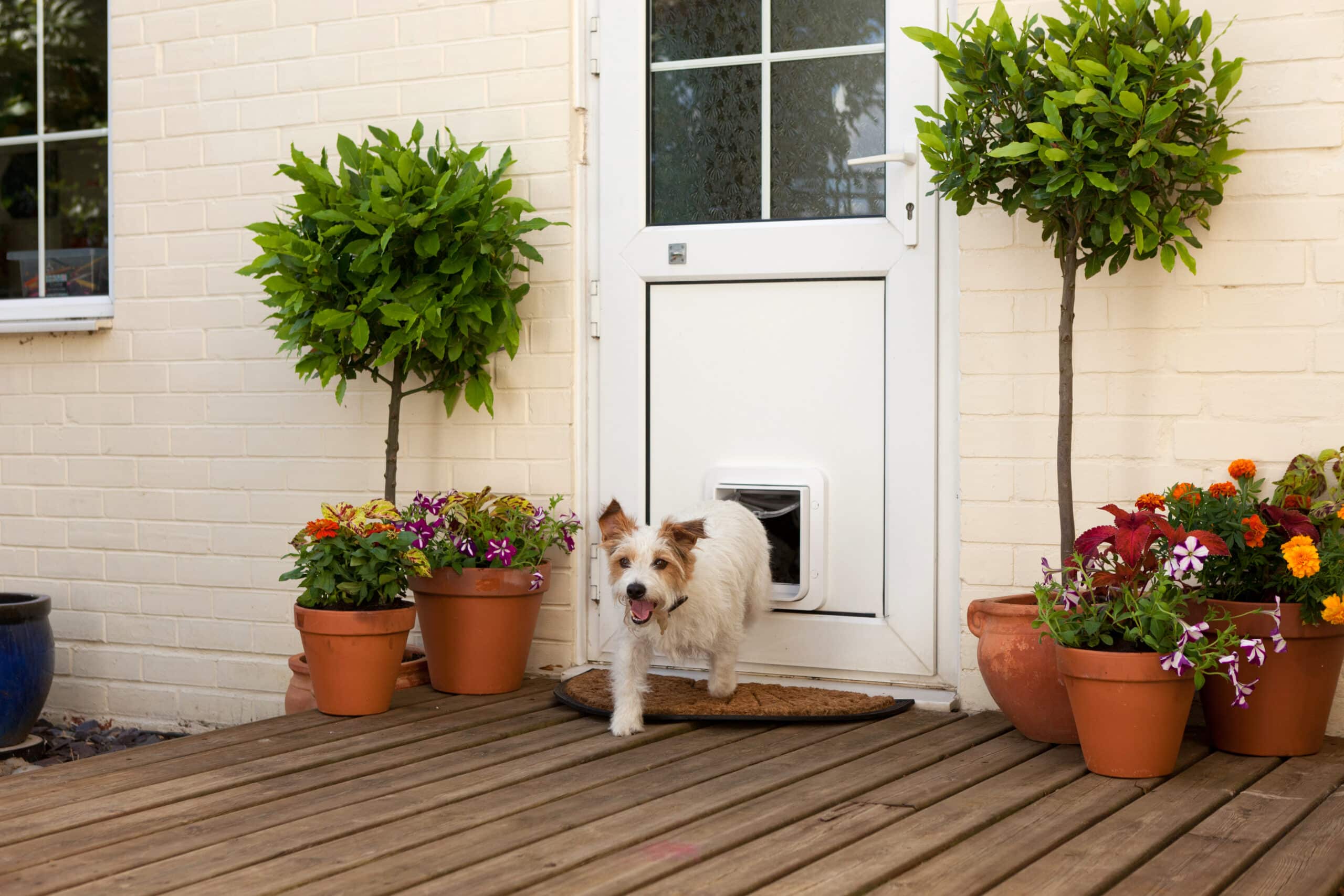
A dog door is a must-have addition to your house if you want your dog free to come and go as they like. Choosing the correct dog door guarantees not only security and utility for your house but also convenience for your pet regardless of breed size. Given the abundance of choices, deciding which dog door is best can feel daunting. This article will lead you through the key elements to take into account and assist you to make a wise choice for your pet friend as well as for you.
1. Your Dog’s Dimensions
Choosing a dog door first and most obviously takes your dog’s size into account. Your pet should be able to pass through the door without any difficulty, hence it should be large enough. It shouldn’t be so big, though, that it compromises security or wastes energy allowing in pointless drafts.
Measurement Techniques:
Measurement of your dog’s height and width will help you to choose the proper dog door size. Generally speaking, the dog door should be broad enough to let your dog pass through without squeezing and at least 2 inches taller than her shoulder height.
Consider future growth if you own a tiny dog or a puppy. Under such circumstances, choosing a door that can fit your adult dog could be a smart decision. You could also wish to look for smaller-sized doors appropriate for several pets or adjustable dog doors that grow with your dog.
2. Type of Dog Door
There are several types of dog doors, each with particular advantages based on your demand. The most often occurring varieties are broken out here:
The classic style and among the most often used are flap doors. Usually constructed of a soft, flexible material like vinyl or rubber, they let your dog push through effortlessly. Most houses would benefit from these, which also offer a decent mix of performance and price.
Electronic Microchip Dog Doors
An electronic dog door could be the answer if security worries you. These doors run with a key your dog wears on their collar. The door opens automatically when your pet gets close so they may pass through. These provide more control and security and help to stop other animals from invading your house.
Reinforced materials and locking systems on security doors help to exclude intruders. For houses that give security and pet freedom top importance, they are perfect. These doors provide piece of mind even if they can be a little more costly and come in many different designs.
A sliding dog door could be quite appropriate for homes with sliding glass doors or windows. Installed into the sliding door track, these doors provide a passageway for your dog and let you leave your sliding door in situ. For renters or people with current sliding doors who desire not to cut through doors or walls, they are usually the best option.
3. Durability and Materials
The dog door’s material can influence both its performance in several weather situations and its lifetime. Typical materials used in dog doors consist in:
- The flexible materials like Vinyl and Rubber Flaps let your dog push through effortlessly. They might not, however, offer the ideal weatherproofing or insulation.
- Strong and weather-resistant aluminium dog doors abound. Often employed in electrical and security door models, these doors can also be more secure.
- Plastic and polycarbonate are lightweight, reasonably cleanable, and strong materials. Smaller dog doors and sliding doors both include them extensively.
- Though they may not have the best security elements or weather protection, wooden doors usually look better. Homes trying to match the door style with the rest of the décor will find them perfect.
Think on the climate where you live when selecting a material. Select a door with enough insulation if your area experiences very high temperatures. Certain doors have weatherproof flaps that serve to stop drafts and rain, therefore maintaining the energy-efficient and comfortable conditions of your house.
4. Security Elements
Many pet owners give security top priority while constructing a dog door. After all, you want other animals—or even people—not to enter even while you wish your dog to have unrestricted access. The following are some security aspects for thought:
Certain dog doors include built-in locks that let you regulate when the door opens. To stop unwelcome access, for instance, you might lock the door at night or when you are not at home.
Many doors include sliding panels that you can simply lock or unlock, therefore granting complete control over entry.
As was already noted, an electronic dog door opens just upon detecting the collar key of your dog. This keeps undesired creatures out of your house.
5. Energy Efficiency and Insulation
Energy economy should be your first concern while choosing a dog door if your area has either hot summers or frigid winters. Certain doors feature insulated panels or double-flap designs that reduce air leaks and stop your heating or cooling systems from running extra-hard.
Usually built from materials that insulate against the weather, energy-efficient dog doors Look for doors whose silicone or rubber seals assist stop drafts. Additionally look for flaps with weatherstripping to block wind and rain.
6. Installation requirements
Another major consideration while selecting a dog door is installation convenience. While some doors are easy enough for homeowners to install themselves, others could call for expert assistance. You might want to think about expert installation if you’re not skilled with tools or concerned about cutting into your doors or walls.
Although many manufacturers provide customer support to assist with installation, most dog doors come with thorough instructions. Still, it’s always wise to find out whether the door will fit the intended spot and what equipment or adjustments could be required.
7. Budget and Warranty
Dog doors range in cost from reasonably priced choices to upscale designs. Your choice will be influenced by your budget, but keep in mind that the least expensive choice might not necessarily be the best. Low-cost doors could not include insulation, security elements, or durability.
Additionally, search for a door with a warranty since it provides peace of mind and guarantees the quality of the good. A warranty can assist you cut repair or replacement expenses should the door break or malfunction.
8. Brand and Reviews
At last, give brand some thought and review before you buy. Choosing a recognised brand, such as Australian Pet Doors guarantees that you are getting a premium good supported by first-rate customer service.
From hand-made flap designs to high-tech, safe electronic doors, Australian Pet Doors presents a vast array of dog doors. They also offer useful installation techniques and tips to ensure your experience is flawless. Visit our range of products in our online store to investigate their product variety and select the ideal dog door for your house.
Conclusion
Selecting the appropriate dog door for your house calls for much study and consideration. Examining your dog’s size, type of door, materials, energy efficiency, security elements, will help you to choose the ideal option for your house and pet. Choose a door that meets your demands, budget, and way of life whether your search is for a basic flap door or a high-tech electronic type. Furthermore keep in mind that a content dog is a door-opening dog!