
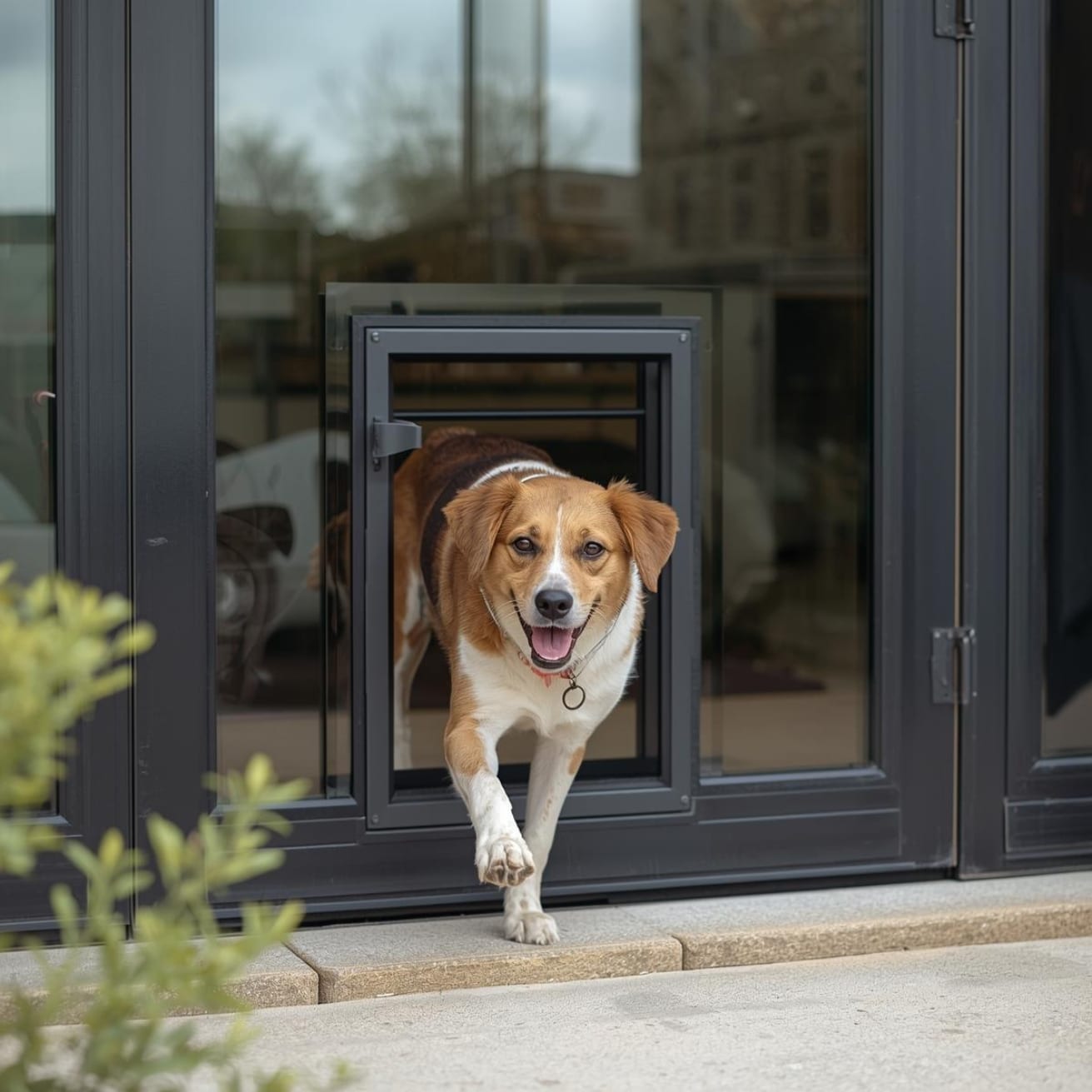
So your dog has figured out that if they stare at you long enough, you’ll eventually get up and open the door for them. Classic. If you’re tired of playing doorman for your four-legged housemate – and honestly, who isn’t – a dog door is the obvious fix. But if your main exit point is a glass sliding door or a big glass panel, you might be scratching your head, wondering how that’s even going to work.
Good news: fitting a dog door in a glass door is absolutely doable. It just works a bit differently from how you’d do it in a timber or aluminium door. Here’s the rundown on what’s actually involved.
Why Glass Is a Different Beast Altogether
Here’s the thing about glass doors – you can’t just grab a jigsaw and cut yourself a hole. Most external glass panels in Australian homes, whether you’re in a suburb of Melbourne or somewhere out in the regions, are made from toughened safety glass. That’s the type that shatters into tiny pebbles rather than jagged shards, which is a good thing for safety. But once glass has been through the toughening process, it cannot be cut, drilled, or modified after the fact.
Try it, and the whole panel will shatter.
So the way a proper pet door glass door installation works is this: a brand-new glass panel is custom-ordered with the cut-out already built in, before the glass gets toughened. It sounds like extra steps, but the end result is really tidy – it looks factory-made because, well, it basically is.
Step One: Measure Up (This Part Matters a Lot)
Before anything else, you need accurate measurements. A professional glazier will come out to your place, have a look at the existing glass, and measure everything up properly. They’ll confirm the minimum panel dimensions needed to fit the size of pet door you’re after, because you can’t squeeze a Great Dane-sized flap into a panel that’s too small.
They’ll also have a yarn with you about where to put it. A lot of people assume the flap has to go in the main sliding door, but depending on how your home is set up, there might be a fixed side panel or a second glass door that actually makes more sense. A good installer will walk you through your options.
Size matters here too – picking the right dog door for glass door installation is based on your actual dog, not some vague idea of a dog. Measure your pet’s height and width and add a bit of room to spare. You want them walking through comfortably, not sucking it in every time.
Step Two: Ordering the New Panel (Yes, There’s a Wait)
Once everything’s sorted – measurements confirmed, pet door selected – the new glass panel gets ordered. The aperture for the flap is shaped and finished before the glass goes through the toughening process. This is non-negotiable; there’s no shortcut here.
Expect to wait around two weeks for the custom panel to come through. We know, patience is hard when your dog is giving you the eyes. But it’s genuinely worth it – what you get back is a purpose-built safety glass panel with a professional-grade opening, not a botched DIY job with a cracked panel and a bad seal.
If your current glass has a tint or a film applied to it, this can usually be matched on the new panel so everything looks consistent from the inside and out.
Step Three: Installation Day
When your new glass is ready, the installer comes back to finish the job. Out comes the old panel, in goes the new custom one – already fitted with the pet door in place. It’s a clean, neat process when done properly.
Weatherproofing is a big part of this stage. A well-installed dog door in a glass door should seal up tight against the elements – no draughts sneaking through in winter, no water coming in when it’s bucketing down, and definitely no uninvited wildlife finding its way inside. The edges of the pet door housing get sealed properly against the glass so everything sits flush.
Once the panel is in, the installer will check the flap swings freely and latches properly. Depending on which model you’ve gone for, that might mean a magnetic seal, a locking slide cover, or even a microchip-activated flap that only opens for your pet. That last one is particularly handy if the neighbourhood cats have a habit of treating your kitchen like a self-serve buffet.
Picking the Right Dog Door for the Job
Not every pet door is going to be right for every situation, and the right dog door for glass door installation depends on a few things: your dog’s size, the glass thickness, and what features matter most to you.
For insulation, look for a flap with a solid seal around the edges. Thin, floppy flaps might seem fine in autumn, but come July in Melbourne or a cold snap in the Snowy Mountains, you’ll feel the difference on your energy bill. A well-insulated flap keeps the warmth in and the cold out.
If you’ve got multiple pets or security is something you think about, a locking cover or a microchip door gives you more control. They cost a bit more upfront, but they’re genuinely useful in day-to-day life.
Getting Your Dog Used to Their New Door
Here’s something nobody tells you: even dogs who are normally fearless about everything can be a bit put off by a new pet door glass door setup at first. It’s new, it smells like manufacturing, and it moves in a way they weren’t expecting. Don’t be surprised if your dog sniffs it suspiciously for a day or two before committing.
The classic approach is to prop the flap open and lure them through with a treat on the other side. Gradually reduce the amount of time you hold it open until they’re doing it themselves. Most dogs crack it pretty quickly once they figure out the flap leads to the backyard. Puppies and older dogs might take a little longer, and that’s completely fine – just go at their pace.
A Bit of Maintenance Goes a Long Way
Your pet door glass door installation isn’t a set-and-forget situation – though it’s pretty close. Every couple of months, give the flap and frame a wipe-down to clear out any dirt or grime that can affect the seal. Check the hinges or pivot points for wear, and have a look at any rubber or silicone sealing around the edges to make sure it’s still sitting properly.
Most manufacturers include a care guide with the door – it’s worth actually reading it rather than chucking it in the junk drawer. Following the basic maintenance steps will easily add years to the life of your installation.
Also, keep an eye on the glass around the cut-out. A properly installed toughened panel is rock solid, but if you ever notice any chips or cracks near the edges of the opening, get a professional to look at it sooner rather than later.
Don’t Be Tempted by the DIY Route
You might come across DIY kits online that claim to work with existing glass. Our honest advice: don’t go there. Cutting or drilling toughened glass yourself isn’t just difficult – it’s likely to shatter your entire panel and leave you worse off than when you started. Beyond the cost of replacing the panel, a badly installed dog door in a glass door can create draught problems, compromise the glass around the opening, and potentially void any warranties on your door.
Going through the proper process – custom panel, professional installation, quality dog door for glass door – means you end up with something that genuinely works, looks great, and holds up over time. It’s also done to Australian safety standards, which matters for any glass that’s used in external doors and panels.
At Aussie Pet Doors, we’ve got a solid range of pet doors that are well-suited to glass installations, and our team is always happy to help you find the right size and style for your home and your dog. Whether you’re in an inner-city terrace in Fitzroy, a place on the peninsula, or a property out woop woop, giving your dog their own door is one of those small upgrades that makes everyday life noticeably easier – for both of you.
FAQs
Can you install a dog door in a glass door?
You sure can! It’s not a DIY job, though – glass can’t be cut after toughening, so a custom panel with the opening pre-built is ordered and professionally installed. The end result looks brilliant and works a treat.
What type of dog door works best for a glass door?
Look for a flap with a strong seal, a rigid frame, and a finish that suits your glass thickness. Magnetic closures are great for insulation, and microchip-activated doors are an excellent option if you want to keep other animals out.
Will it be safe to install a pet door in a glass door?
It’s indeed very safe, as long as it’s done properly. A professional installation uses toughened safety glass with the cut-out manufactured before toughening, so the structural integrity stays fully intact. No corners cut, no compromises.
How much does it cost to install a dog door in a glass door?
Costs vary depending on glass size, pet door model, and your location, but generally, you’re looking at a few hundred dollars all up. It’s not the cheapest home upgrade, but the convenience is hard to argue with.
Can a dog door be installed in a sliding glass door?
Yes! It’s one of the most common setups. The flap is usually fitted into a fixed side panel rather than the sliding panel itself – that way your door still slides freely and everything works exactly as it should.
Do you need a professional to install a dog door for a glass door?
Yes. Totally. Unlike timber doors, glass cannot be modified after toughening – attempting it yourself will shatter the panel. A qualified glazier handles everything from the custom glass order through to final installation. Don’t skip this one.
Will installing a pet door in a glass door affect insulation?
It can if you choose a low-quality flap – thin or poorly sealed doors will let draughts through. Go for a door with a solid weatherseal and a good magnetic closure, and you’ll barely notice a difference on your energy bill.
How do you measure the right-sized dog door for a glass door?
Measure your dog’s shoulder height for the flap height, and their widest point (usually the shoulders) for the width. Add a couple of centimetres to each for comfort. When in doubt, size up – nobody wants a snug squeeze every trip outside.