
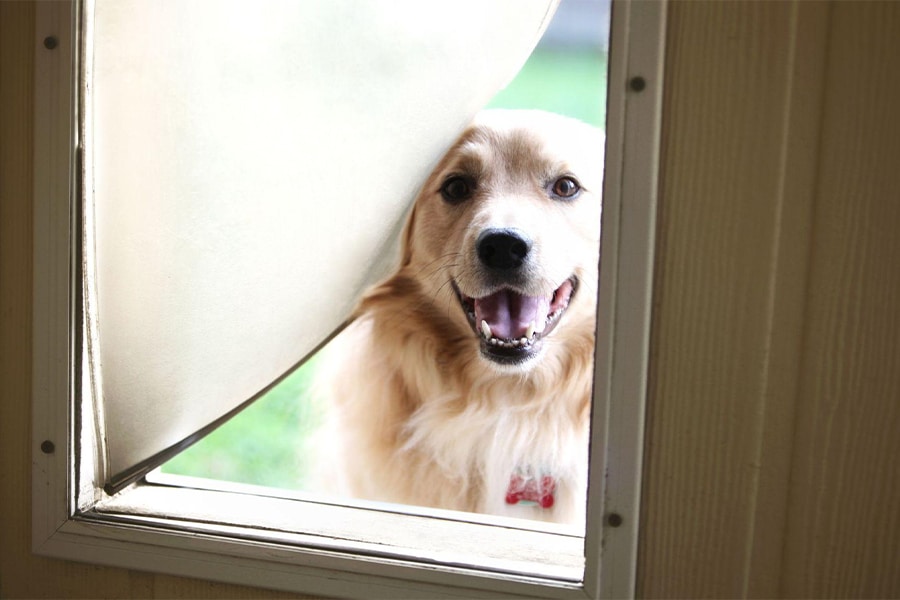
Got yourself a doggy door, but you have no idea where to begin? Here is a five-step guide to teach your furry friend how to use a dog door effectively and with confidence – starting from determining the appropriate size to reinforcing each tiny success step by step.
If you’re thinking about getting a dog door and need some training tips, this post is for you! One of the most common questions about dog doors is: “Will my dog use the door?” Well, the answer is yes! But, they may need some training before fully understanding the freedom a dog door can provide. This article will reveal our popular method for training your dog to use a dog door successfully.
Remember that all dogs will learn at different speeds, but if you give them enough time, your dog will learn to use the door successfully and can go in and out whenever they please!
Why Teaching Your Dog to Use a Dog Door Is Worth the Effort
Before we jump into the how-to, it’s worth taking a moment to appreciate why teaching a dog to use a dog door is such a worthwhile investment of your time. Think about it – how many times a day do you get up just to open the back door for your furry mate? Whether it’s first thing in the morning, in the middle of a great TV show, or late at night, playing doorman for your dog can get a bit tiring after a while.
A dog door gives your pup the gift of independence. They can nip outside for a toilet break, soak up some sunshine in the backyard, or burn off some energy whenever they feel like it – all without needing you to drop what you’re doing. And honestly? Most dogs absolutely love it once they get the hang of it. That little boost of freedom can make a real difference to their confidence and wellbeing.
For pet owners who work from home, have young kids, or simply value their downtime, a trained dog who uses their door independently is a genuine game-changer. So yes, a little patience upfront is absolutely worth it!
Choosing the Right Size Dog Door
Choosing the right-sized door for your dog will give you the best results when training them. If you get a door too big for a small dog, they may have trouble lifting the flap, which is too difficult for them to use. The same goes for a door that is too small – if your dog cannot fit comfortably through the door, they will not use it.
Once you’ve selected the correct size door, that’s great! But now, you need to ensure it is installed at the correct height. Please read the instructions provided with your door, and measure your dog from the ground to the top of their shoulders to get their exact height. Try not to rely on breed size, as some breeds can vary in height (and width!). A snug, comfortable fit through the flap is what you’re after – your dog should be able to pass through naturally without having to squeeze or duck awkwardly.
It’s also worth thinking about the flap material. For Australian conditions – think scorching summer days and chilly winter nights, a good quality, weather-resistant flap makes a real difference. A flap that’s too stiff may discourage your dog from pushing through, especially in smaller breeds or older dogs. A softer, flexible flap is often the better choice when you’re just starting out with training.
Training a dog to use a dog door
Dog door installed? Perfect, now it’s time for the fun stuff! Most dogs will only take one or two tries to be successfully trained, but there are some exceptions to the rule. If your dog takes five (or twenty) attempts, don’t get discouraged – they’ll get the hang of it soon enough! Here is our easy five-step process to train your dog and get them ready to use their new dog door.
Step 1: Introduce Your Dog to the Door
Lead your dog to the door and show them how it works. Your dog will be confused at first by this new door technology, and they may take a few sniffs before appearing interested. Let them explore at their own pace without rushing them. You can gently push the flap back and forth so they can see how it moves and hear the sound it makes.
One really handy trick when you’re first learning how to train a dog to use a doggy door is to prop the flap fully open to begin with. You can use a bit of tape or a hook to hold it in the open position so there’s no barrier at all.
In doing this, your dog can walk directly through the door without needing to understand the flap, while simultaneously figuring out what a door is. After your dog becomes familiar with passing through the open frame, you can then add the flap.
Step 2: Use treats to encourage them through the door
Stay on one side of the door while using a reward to entice your dog to put its head into the doorway. You may keep the door open with one hand and place the reward slightly past the doorway. The scent of the food reward works wonders when training your pet.
Try to use high-value treats for this stage of training – think small pieces of cooked chicken, cheese, or their absolute favourite snack. You want the reward to feel extra special, so your dog really connects the door with a positive experience. Keep the treats small so you can do plenty of repetitions without your dog getting too full or losing interest.
Step 3: Reward Them for Any Success
If you are fortunate enough that your dog’s head makes its way through, then a reward will make the dog understand that this is what they should be doing. Timing is important when giving the reward, as you need to give it immediately after your dog makes any effort to enter the dog door. This should be accompanied by praise.
Step 4: Build Up Gradually
Once your dog is comfortable poking their head through, start encouraging their full body to come through. Have a family member or friend stand on the other side to call them through, or toss a treat so they follow it all the way. Each small progression – head, shoulders, whole body – deserves a reward.
If you propped the flap open earlier, now’s the time to start lowering it bit by bit. You can tape it halfway down for a session or two, then let it hang fully. Some dogs take to the full flap immediately; others need a little more time to get comfortable with the sensation of pushing through it. Both are perfectly normal – just go at your dog’s pace.
Step 5: Repeat Until It Becomes Second Nature
Keep up with the training; your dog will soon be zipping in and out whenever they please! Short, positive training sessions of five to ten minutes work best – a few times a day is ideal. Finish each session on a high note so your dog is always left feeling good about the door. Consistency is everything here.
Common Challenges and How to Handle Them
Even with the best approach, some dogs will present a few extra challenges along the way. Here are some of the most common ones, and what you can do about them:
My dog is scared of the flap.
This is actually quite common, especially with timid breeds or rescue dogs who might have had some unusual experiences in the past. If your dog seems nervous or backs away from the flap, slow things right down. Go back to just getting them comfortable near the door without any pressure to go through. Reward them for simply approaching it, sniffing it, or touching it with their nose. Patience and no pressure is the name of the game.
My dog goes through but won’t come back in.
Some dogs are happy to head outside but haven’t quite figured out that the door works both ways! Practice the same treat-and-encourage method from the outside, calling them back in. Stand inside and call them with excitement, and treat them generously when they come through from the outside. They’ll soon realise it’s a two-way street.
My dog uses the door but still waits at it sometimes.
Old habits die hard! Some dogs, particularly those who have spent years waiting to be let out, may still occasionally stand at the door out of habit. Just gently encourage them through, and over time, they’ll grow in confidence and start using the door freely on their own.
A Quick Note on Puppies and Older Dogs
Puppies are generally little learning machines and tend to pick up how to teach a dog to use a dog door fairly quickly – especially when treats are involved! That said, make sure the door is sized appropriately for their current size, and keep in mind they’ll grow fast. It’s worth chatting to the team at Aussie Pet Doors about the right fit for a growing pup.
Older dogs can absolutely learn to use a dog door, too, though they might take a bit more time and encouragement. For your elderly dog, consider the possibility that he may have arthritis or hip dysplasia. In such cases, make sure that the height of the step at the door bottom is kept low enough so that your dog can cross easily.
Patience Is Key
As with all training, patience is key, and it may take some time before your dog is 100 per cent confident using the door. Try to keep an eye out for them, as some dogs may still think they need to wait by the door if they need to use the toilet. However, in no time at all, your dog will soon grasp the idea of the dog door as a fast way to get outside for the toilet or to relax in the sun!
Never scold your dog for not going through, or force them through the door; it can create a negative association and set your training back considerably. Keep everything upbeat, reward generously, and let your dog move at their own pace. You’ll get there!
Ready to Get Started?
If you’re still on the lookout for the perfect dog door for your home, the friendly team at Aussie Pet Doors is here to help. From choosing the right size and style to professional installation across Australia, we’ve got you covered. Once your door is in and your dog is trained, you’ll wonder how you ever managed without one!
Got questions about training or finding the right fit for your pup? Feel free to get in touch – we love hearing from fellow dog lovers and are always happy to help point you in the right direction.